Coral Reefs in the Pacific
Providing scientific information to support ecosystem approaches to management and conservation of coral reefs.
Corals of the U.S. Pacific Islands Region
Corals and coral reefs are found around the islands and atolls of the Pacific Island region, which consists of the Hawaiian Islands (State of Hawaiʻi), the Marianas Islands (Territory of Guam and Commonwealth of the Northern Mariana Islands), the eastern portion of the Samoan Islands (Territory of American Samoa), and several islands and atolls in the central Pacific collectively referred to as the Pacific Remote Island Area (Wake Island, Johnston Atoll, Palmyra Atoll, Kingman Reef, Jarvis Island, Baker Island, and Howland Island). Biodiversity of marine organisms, including corals, is higher in the Mariana Islands, lower in the Hawaiian Islands, and intermediate in American Samoa and the Pacific Remote Island Area.
Explore coral species in the Pacific Islands region
Coral Biology
Corals are colonial invertebrates (animals without backbones) that excrete a calcium carbonate skeleton. There are two main types of corals: reef-building (also known as hermatypic) corals, which are only found in tropical regions, and non-reef-building (also known as ahermatypic) corals, which do not produce reefs and are found worldwide. Most reef-building corals contain microscopic symbiotic algae called zooxanthellae, which live inside the coral tissue. Like other algae, zooxanthellae need sunlight for photosynthesis, and the photosynthetic pigments give corals much of their color. The zooxanthellae provide food for the coral and remove some of the corals' waste products. In return, the coral tissue provides a stable, sunny habitat for the zooxanthellae.
Coral reefs provide habitat for thousands of reef fish, invertebrates, and other organisms. They form barriers along coasts and around islands, providing shoreline protection from storms. They also support fishing, scuba diving, boating, and other recreational activities that generate billions of dollars per year worldwide.

Coral reefs are considered rainforests of the sea. They are the most biologically diverse marine ecosystems, yet they only cover a small portion of the ocean floor and many of their inhabitants remain a mystery. The number of invertebrate species that live in coral reefs is estimated to range from 1 to 10 million, many of which are still unidentified and undiscovered.
Compounding our lack of knowledge on reef inhabitants, coral reefs are among the most threatened ecosystems in the world. Corals are highly susceptible to local stressors (overfishing, pollution, and habitat destruction) and global stressors (climate change, coral bleaching, and ocean acidification).
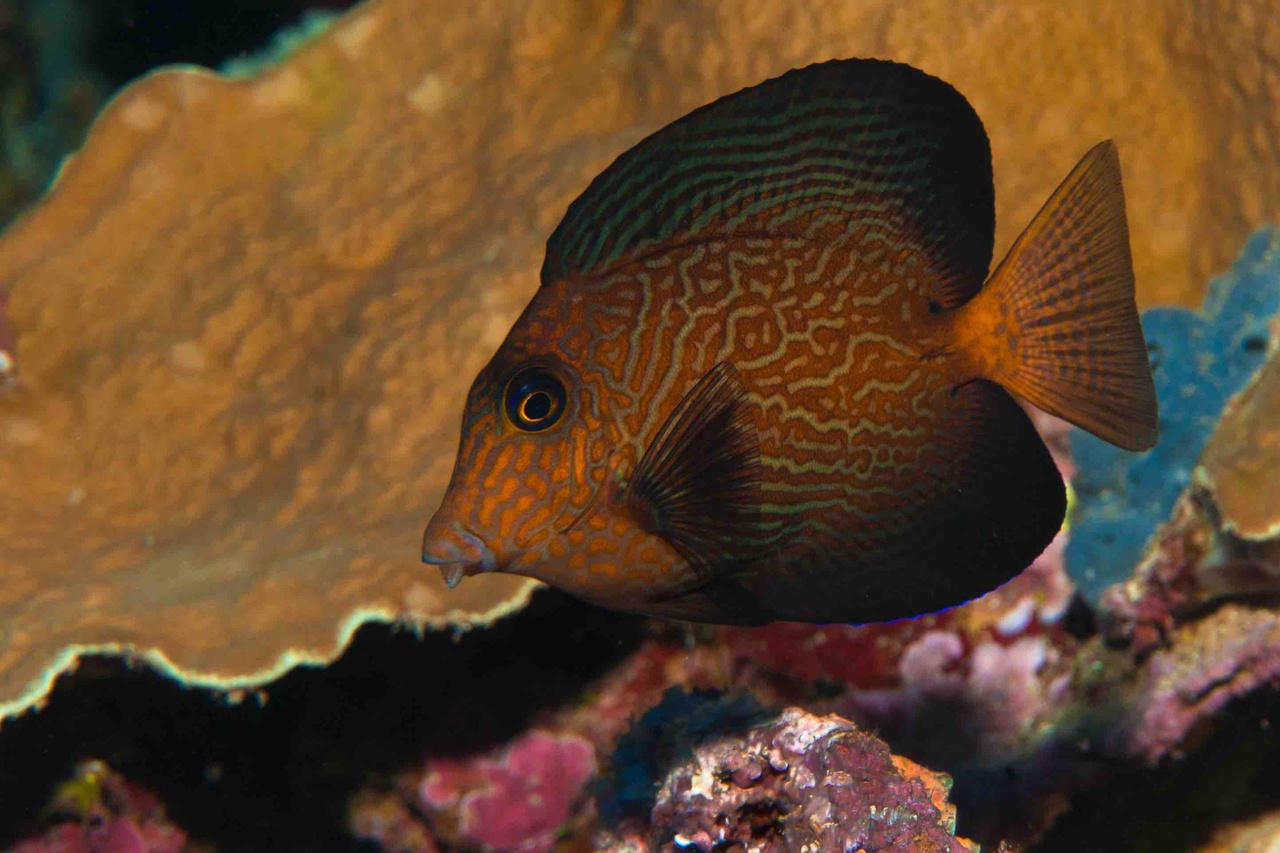
In the Pacific Islands, we monitor coral reef health at nearly 40 islands and atolls using a suite of interdisciplinary monitoring and research activities, including habitat mapping, ocean and climate studies, and long-term monitoring of coral reef ecosystems. As part of the Pacific Reef Assessment and Monitoring Program (Pacific RAMP), we use standardized survey methods to assess corals, algae, other invertebrates, fishes, and microbes in among their benthic habitats and oceanographic environments.
These methods are used consistently across the Pacific Islands region to enable comparative ecosystem analyses across diverse biogeographic, environmental, oceanographic, and socioeconomic (human-use) gradients. Since 2000, we have been collecting data on corals, reef fishes, algae, invertebrates, microbes, and ocean chemistry. This long-term monitoring program helps us assess the status and health of coral reef ecosystems throughout the U.S. Pacific. Our Pacific RAMP surveys align with the National Coral Reef Monitoring Plan and contribute scientific information that is essential to protect, conserve, and restore coral reef resources by maintaining healthy ecosystem function.
Coral Health and Threats
Coral cover—and the balance between coral and algal dominance on reefs—can indicate the overall health of the reef ecosystem. Trends in coral cover over time can be used to assess the resistance (ecological stability) and resilience (ability to recover) to disturbances, a critical indicator for long-term survival of coral reef ecosystems. Our divers survey shallow reefs using rapid ecological assessment methods to measure coral cover, mortality, demography, bleaching, and disease.
Corals are facing severe threats, and it’s highly likely that these threats will increase over time. NOAA identified 19 threats, including: rise in ocean temperatures, ocean acidification, disease, ecological effects of fishing, and poor land-use practices. The three major threats identified—rising ocean temperatures, ocean acidification, and disease—are all directly or indirectly linked to greenhouse gas emissions and a changing climate. But, despite the broad global threats to corals, there is evidence that alleviating more local stressors can help improve resiliency for many coral species.
Learn more about Coral Health and Threats in the Pacific Islands

Reef Fishes
The numbers and size of reef fishes are also indicators of overall ecosystem health. Fish communities can reveal insights into natural oceanographic processes, such as nutrient upwelling and disturbances such as overfishing, pollution, and climate impacts. We use two main types of underwater surveys to count and study reef fishes: scuba diver surveys and remote camera surveys.

Ocean Conditions
Coral reef ecosystems are influenced by changing weather and oceanographic factors, including temperature, currents, carbonate chemistry, nutrients, and productivity. Ocean temperatures and ocean acidification are fundamentally changing the condition and chemistry of the world’s oceans and threatening marine resources, especially coral reefs and their inhabitants. We document and assess ocean conditions around coral reefs with a combination of water samples, climate station installations, and satellite imagery.

Survey Methods
- Rapid ecological assessments: Scuba divers swim along transects and stop at specific sites above reefs to photograph and document coral condition and fish species.
- Remote camera surveys: Underwater video cameras capture footage of benthic habitat and reef fish populations.
- Water chemistry: We sample ocean water to monitor changes in temperature, salinity, nutrients, and ocean acidification over time.
- Coral growth rates: Coral “cores” show growth of the coral’s skeleton through time, similar to how rings in a tree trunk show the tree’s age and growth.
- Calcium carbonate: Corals make their skeletons with calcium carbonate. We install “calcification accretion units,” or small plates, on reefs to measure levels of calcium carbonate and coral reef growth.
- Bioerosion rates: Ocean acidification can also cause coral reefs to erode or break down. If a reef is eroding faster than it is growing, its coral skeleton will weaken and, eventually, massive reef structures will convert to rubble, sand, and silt—altering the entire ecosystem.
- Reef biodiversity: Autonomous reef monitoring structures are used to examine the biodiversity and community structure of the coral reef.
Corals are Valuable in Many Ways
Corals are tremendously important to the biodiversity of the world's oceans and they have measurable economic value for communities around the world. Reefs provide home and shelter to over 25 percent of fish in the ocean and up to 2 million marine species. The direct economic and social benefits of coral reefs are real and wide ranging.
One independent study reported that coral reefs provide approximately $483 million in annual net benefit to the U.S. economy from tourism and recreation activities, and a combined annual net benefit from all goods and services of about $1.1 billion. NOAA also estimates the annual commercial value of U.S. fisheries from coral reefs to be more than $100 million; reef-based recreational fisheries generate an additional $100 million annually.
Conservation & Management
Hawaiʻi is one of the most isolated archipelagos in the world and therefore possesses some of the highest marine endemism recorded for a number of taxa. The location of Hawaiʻi in the middle of the Pacific Ocean exposes its coral reefs to large open ocean swells, which play an important role in structuring the coral reef community. The archipelago consists of two areas: the main Hawaiian Islands, which are made up of populated, high volcanic islands with non-structural reef communities and fringing reefs abutting the shore; and the Northwestern Hawaiian Islands, consisting of mostly uninhabited atolls and banks. These island areas stretch for over 1,400 miles (2,250 km) across the Pacific from the island of Hawaiʻi in the southeast to Kure Atoll in the northwest. Coral communities within the archipelago range from newly formed colonies at the edges of recent lava flows to established and subsiding atolls. The extent of endemism and diversity of habitats is considerable throughout the whole archipelago.
Coral reefs are an important part of Hawaiian culture and history, including food, cultural practices, recreation, and overall survival. According to the Hawaiian Creation Chant, the Kumulipo, the coral polyp was the first creature to emerge from the sea during the creation of the world. The early Hawaiians recognized that coral reefs are a building block of our islands and used coral in religious ceremonies to demonstrate honor and care for ocean resources. Hawaiʻi's coral reef communities provide protection from storm waves, create the large surf that makes Hawaiʻi world famous, and are critically important to the State's approximately $800 million annual marine tourism industry.
Over 70 percent of the 1.2 million people in Hawaiʻi live on Oʻahu, mostly concentrated in the Honolulu metropolitan area. In addition to this resident population, nearly 7 million tourists visit Hawaiʻi each year. This large number of people puts direct and indirect pressure on Hawaiʻi coral reefs. Land-based sources of pollution, overfishing, recreational overuse, and invasive species impact many coastal areas adjacent to urban areas. Despite these stressors, Hawaiʻi coral reefs remain in relatively good condition, particularly compared with other reefs around the world.
NOAA Fisheries’ developed priorities that link the Hawaiian archipelago as a whole, after careful consideration of the coral reef management objectives. This linkage is critical because, while some objectives have a more exclusive focus (for example, urban development and population impacts), we can apply the knowledge gained from many of the objectives throughout the archipelago. The management objectives and priorities for the main Hawaiian Islands are based on the Fisheries Local Action Strategy in Hawaiʻi, a collaborative effort to decrease fishing-related impacts to coral reefs in Hawaiʻi.